Follow a local hunter into the night forest. With a flashlight, explore along the hunting path and learn the flying squirrel and mountain life from the trees, sounds, and traces.
How the day unfolds
A simple look at how the day moves from PLUWFUN into Sbunaw and back again.
20:00
01
Before the night walk, learn how to enter the forest
Meet at 20:00 at the Feishu Bukee camp base. The route, flashlights, and night-observation rules are explained first.
02
Board the shared vehicle and go into the mountains
From Feishu Bukee to the night-exploration entrance: about 4 km one way, 8 km round trip. A standard group of 8 shares one V9.
About 1 km one way and 2 km round trip, along a safe hunting path, learning tree species, habitat, night sounds, and how hunting observation works.
About 21:30–22:00
04
Take the forest you saw tonight back with you
Return to Feishu Bukee around 21:30–22:00. What did you notice in the forest tonight?
20:00
01
Before the night walk, learn how to enter the forest
Meet at 20:00 at the Feishu Bukee camp base. The route, flashlights, and night-observation rules are explained first.
02
Board the shared vehicle and go into the mountains
From Feishu Bukee to the night-exploration entrance: about 4 km one way, 8 km round trip. A standard group of 8 shares one V9.
03
Turn off the city’s noise and start walking
About 1 km one way and 2 km round trip, along a safe hunting path, learning tree species, habitat, night sounds, and how hunting observation works.
About 21:30–22:00
04
Take the forest you saw tonight back with you
Return to Feishu Bukee around 21:30–22:00. What did you notice in the forest tonight?
In the dark, you may not meet a flying squirrel. But you will start to understand the forest it lives in.
At 8 in the evening, leave from the Feishu Bukee camp base.
Board a 9-seat shared vehicle, go into the mountains, then walk slowly along the hunting path with a flashlight.
The hunter shows the tree species where flying squirrels are active, the clues the night forest leaves, and how to judge an animal’s place from sound, plants, and the surroundings.
This is not a zoo, and it is not a show that guarantees a flying squirrel. What you explore is how people, animals, and trees live together in the mountains.
Depart at 20:00
About 1.5–2 hours
Up to 8 people
NT$250 per person
Night departure
After the forest goes dark, many things start to be seen
The trees you walked past in daylight become another kind of forest at night.
The flashlight does not show only flying squirrels. It may show a stretch of hunting path, a tree suited to roosting, a sound in the forest, or the way a hunter reads the surroundings to judge where an animal is.
Tonight is not about seeing a set number of animals. What you take back is the start of knowing how to look, how to listen, and how to respect the other lives in the forest.
Before the night walk, learn how to enter the forest
Meet at 20:00 at the Feishu Bukee camp base. The route, flashlights, and night-observation rules are explained first.
Briefing
Tonight’s route
How to walk at night
Using a flashlight
Safety reminders
Wildlife observation rules
Board the shared vehicle and go into the mountains
From Feishu Bukee to the night-exploration entrance: about 4 km one way, 8 km round trip. A standard group of 8 shares one V9.
Feishu Bukee camp base
Night-exploration entrance
8 km round-trip share
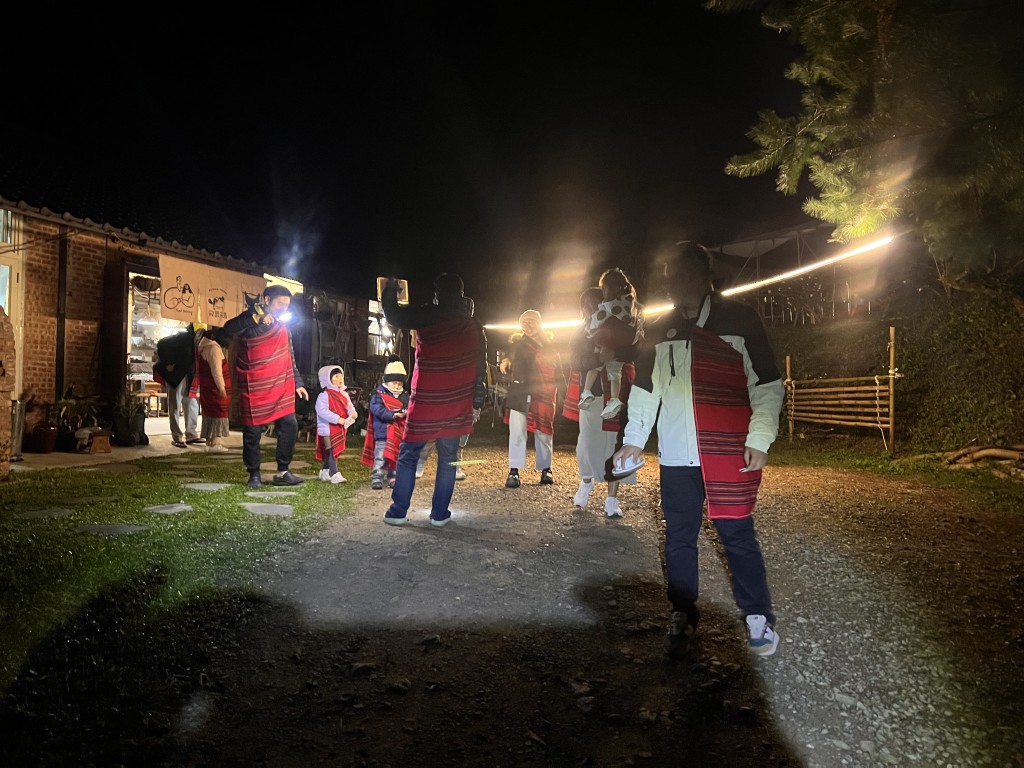
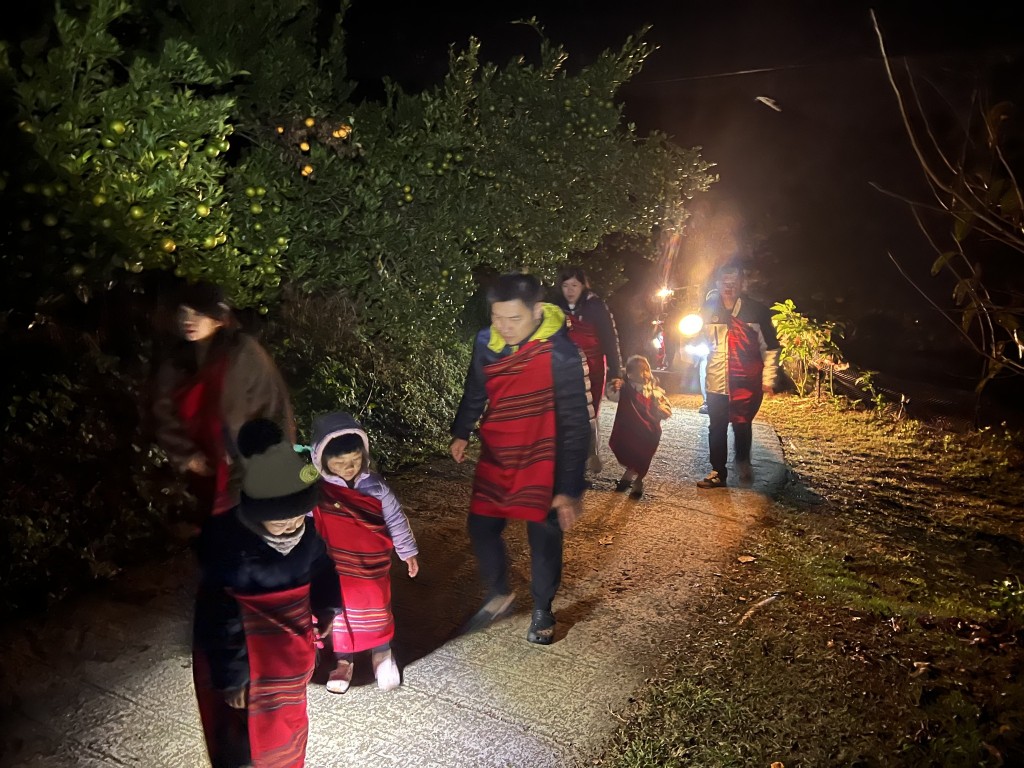
A family on the night walk
Turn off the city’s noise and start walking
About 1 km one way and 2 km round trip, along a safe hunting path, learning tree species, habitat, night sounds, and how hunting observation works.
Hunting path
Tree species where flying squirrels are active
Canopy and habitat
Night sounds
Hunting observation
Flying squirrels and trees
Mountain culture
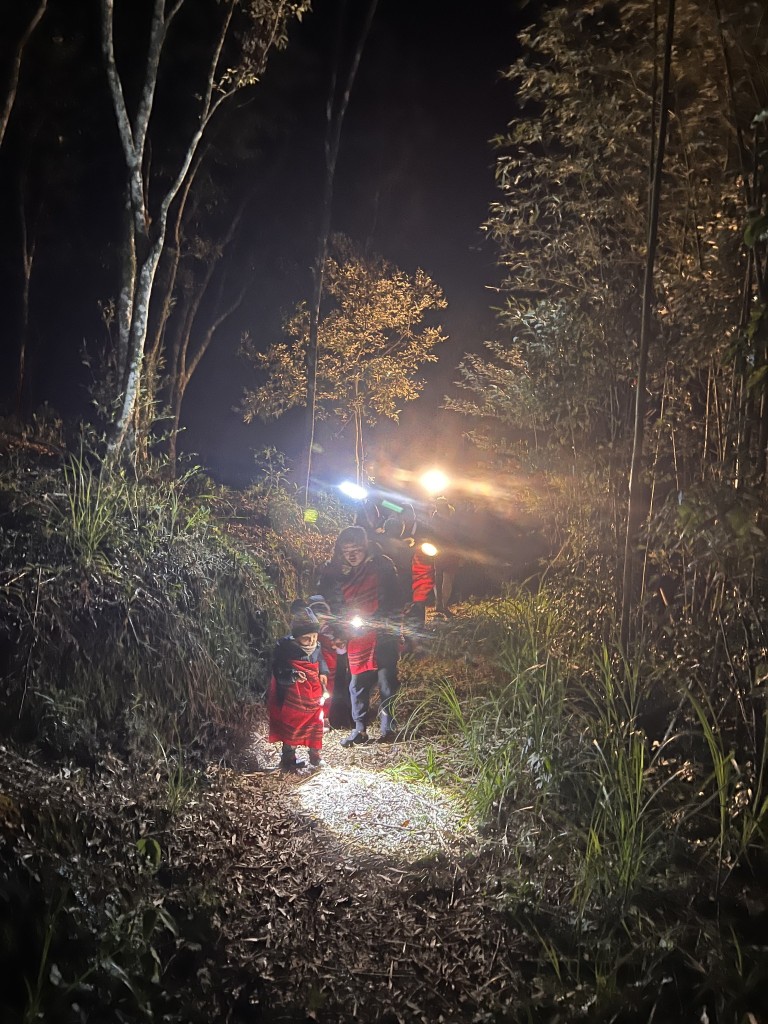
Walking in the night forest
If you meet a flying squirrel
Watch as the hunter directs. Not every session is guaranteed a sighting.
Night observation
Take the forest you saw tonight back with you
Return to Feishu Bukee around 21:30–22:00. What did you notice in the forest tonight?
Return to Feishu Bukee
3–5 minutes to close
The trip ends
The wild has no fixed script
Flying squirrels are wild animals. Whether you can observe them depends on weather, season, their activity, and the forest.
A flying squirrel is not guaranteed every time. “No flying squirrel seen” is still a completed Experience.
Success is not how many flying squirrels you see. It is completing the night-forest exploration, the local hunter’s cultural guidance, taking part in ecological knowledge, a safe night walk, and low-carbon travel by walking and sharing a ride.
Do not feed
Do not capture
Do not touch
Do not chase
Do not leave the safe route for a photo
When wildlife is found, watch as the hunter directs
Avoid shining a strong light on an animal for a long time
Each night walk may include meeting a flying squirrel, and it also leaves movement, place, and cultural results that can keep being recorded.
Do you want to walk into the sbunaw forest at night?
If you want a night that does not guarantee an animal, but does mean setting aside the city’s noise beyond the flashlight and walking a hunting path with a hunter, Night Flying Squirrel starts with a small group.
Want to continue with this tour?
When you are ready, use the button below to request a booking or ask a question.
This is a reservation inquiry, not instant English booking. Staff will follow up.
The small things in this day are already low-carbon travel.
Sustainability highlights
The per-person figure below is a modelled transport comparison for this night walk. Walking distance is listed separately and is not converted into assumed carbon reduction.
We use 8 travelers sharing one V9 as the standard transport model, compared with a typical private-car scenario. Figures are modelled estimates (MODELLED), not third-party verified carbon credits or carbon-neutral claims. Walking distance is listed separately and is not converted into assumed carbon reduction.